

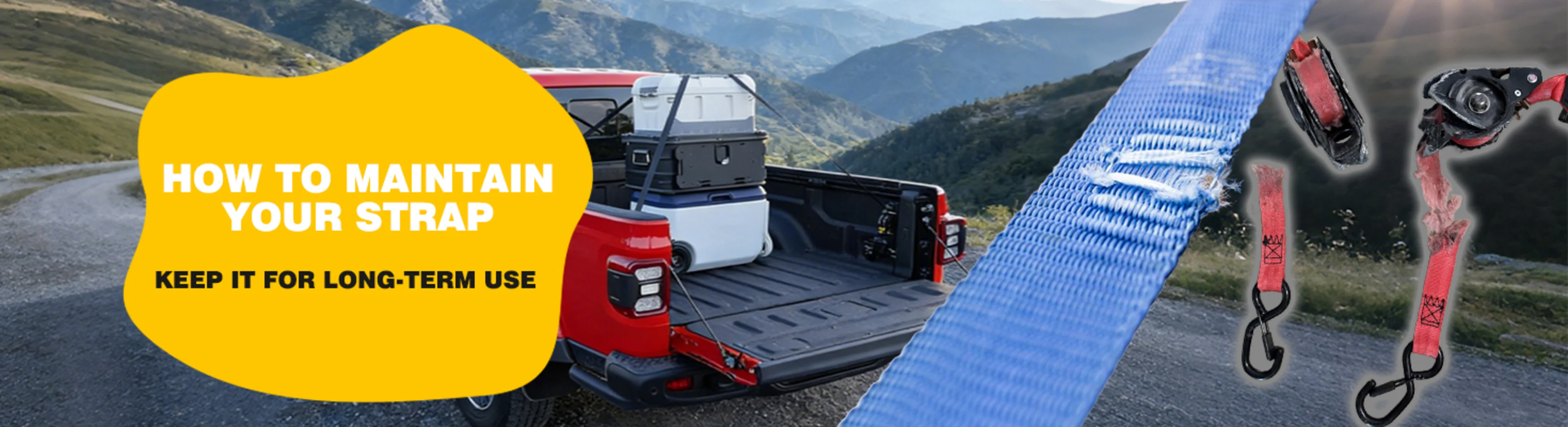
Best Practices for Maintaining Retractable Ratchet Straps
 Dustin Xu
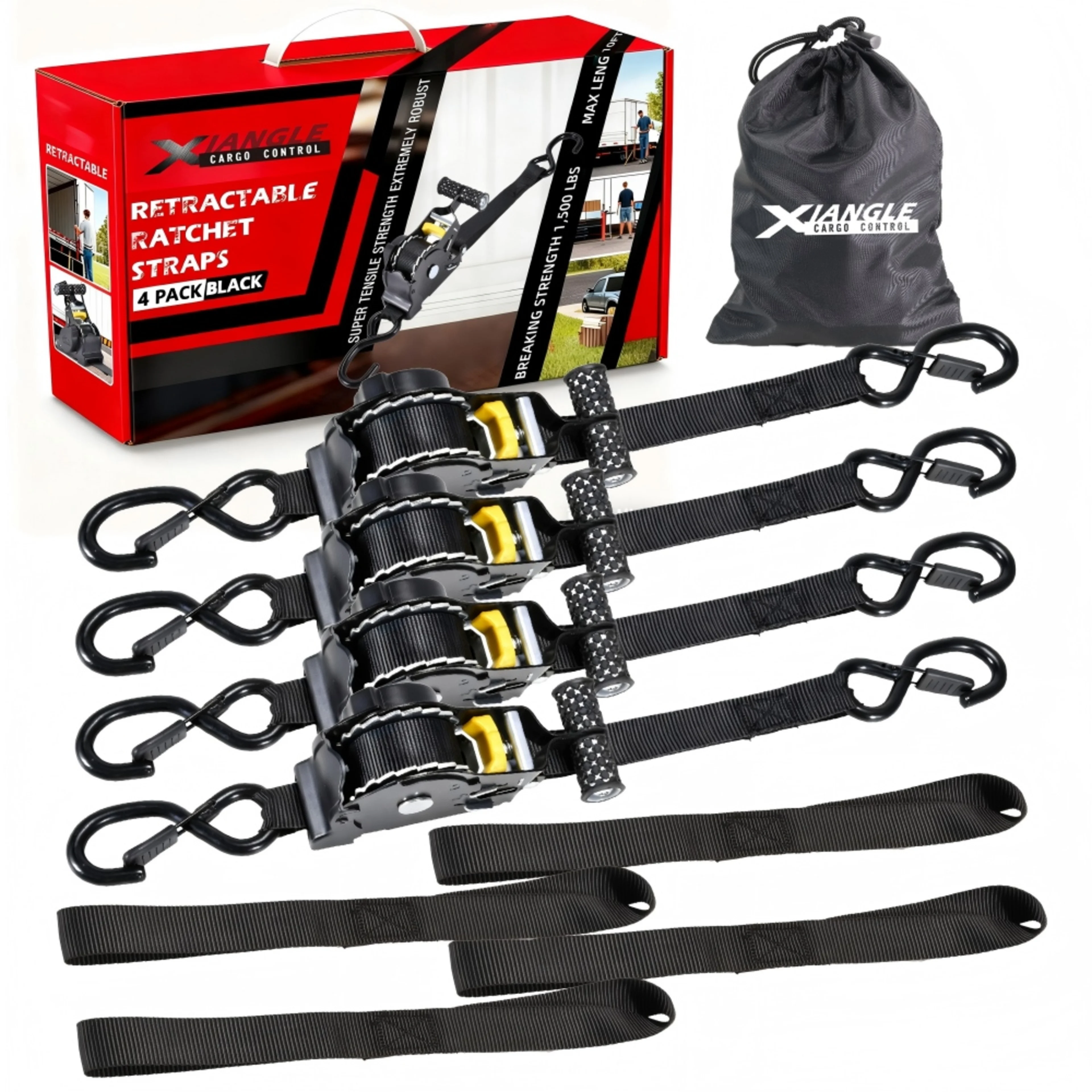
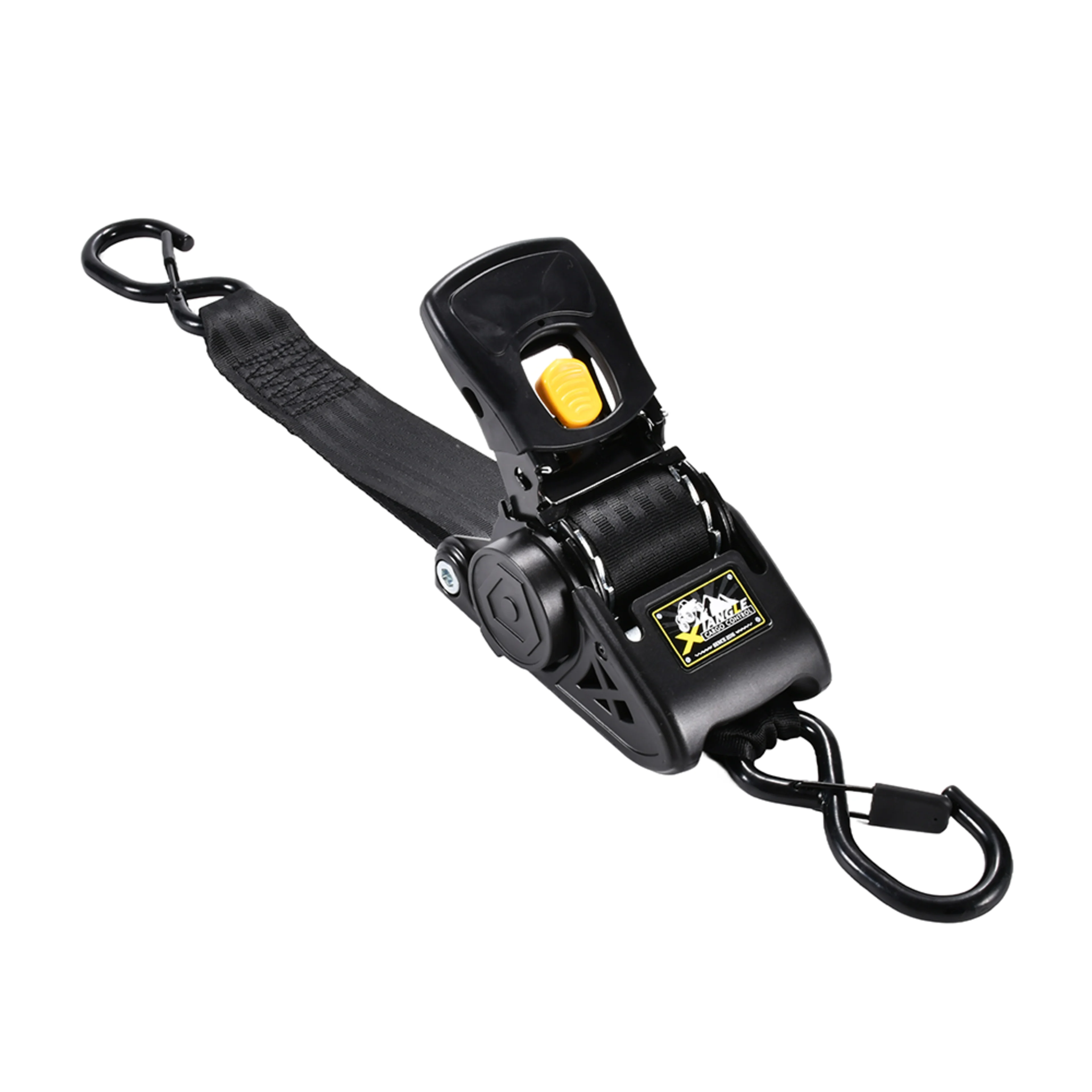
Retractable ratchet straps are built for speed, convenience, and clean storage. Unlike standard ratchet straps, retractable models include a spring-loaded spool and internal brake/locking components that keep the webbing neatly contained. Because of that integrated mechanism, routine maintenance is essential for long service life and safe performance.
This guide covers practical maintenance steps for retractable ratchet straps used on motorcycles, pickup trucks, trailers, and general cargo securement setups.
Quick inspection checklist (before every use)
A 60-second check prevents most field failures.
- Webbing condition: no cuts, fraying, melted fibers, or heavy abrasion
- Retraction: extends and retracts smoothly without sticking or grinding
- Locking/holding: ratchet locks reliably and does not slip under tension
- End fittings: hooks or connectors are not bent, cracked, or heavily corroded
- Mounting (if applicable): base plate and fasteners are tight and not deformed
If any item fails, replace the strap instead of continuing to use it.
1) Clean the webbing the right way
Dirt, grit, and sand accelerate wear. Road salt and moisture increase corrosion risk.
Recommended cleaning steps:
- Rinse the webbing with clean water after exposure to mud, sand, or salt.
- Use mild soap if needed; avoid aggressive solvents and bleach.
- Wipe down the housing and hardware to remove grit around moving parts.
- Let the strap dry fully before retracting it back into the housing.
Why it matters:
Contaminants can abrade webbing fibers and also migrate into the housing, increasing friction on the spool and affecting retraction performance.
2) Keep the strap dry before retracting
Retracting wet webbing traps moisture inside the housing, which can lead to odor, mildew, and internal corrosion.
- If the strap gets wet, extend it and let it air-dry.
- Do not store retractable straps in sealed bags when damp.
- In cold weather, avoid retracting slushy/icy webbing until it is thawed and dried.
3) Prevent twists and uneven winding
Twisted webbing is a common cause of poor retraction and jammed spools.
Best practices:
- Pull the strap straight out, not at a sharp angle.
- If the strap twists, extend it fully and straighten it before retracting.
- Guide the strap during retraction so it winds evenly onto the spool.
Even winding reduces internal abrasion and keeps tension consistent.
4) Do not over-tension the strap
Retractable ratchet straps have a rated Working Load Limit (WLL). Over-tensioning can damage internal springs and brake components.
- Tighten only until the load is stable and secure.
- Do not force the ratchet once resistance increases sharply.
- Never use retractable straps for lifting, hoisting, or overhead loads.
Rule of thumb:
If you must “muscle” the handle to keep turning, stop and reassess the load, anchor points, and strap rating.
5) Inspect the locking and brake performance
A retractable strap must lock reliably to be safe.
What to watch for:
- The strap holds tension without slipping.
- The ratchet mechanism engages consistently each time.
- There is no intermittent release under vibration.
If locking is inconsistent, stop using the strap. Cleaning may help if contamination is the cause, but any repeated slipping is a replacement signal.
6) Check hardware and corrosion points
Hooks, carabiners, and mounting plates carry real load. Corrosion reduces strength over time, especially in coastal or winter salt environments.
- Look for rust around pivot points, spring areas, and teeth.
- Check that hooks are not opening or deforming under load.
- If the strap is used near saltwater, rinse and dry after each use.
For harsh environments, consider corrosion-resistant hardware options and protective storage practices.
7) Storage best practices
Good storage slows UV degradation and corrosion.
- Fully retract the webbing into the housing.
- Store in a dry place away from direct sunlight.
- Avoid leaving straps mounted outdoors year-round without protection.
If the strap must remain mounted, use a cover and perform inspections more frequently.
When to replace a retractable ratchet strap
Replace the strap immediately if you notice:
- Frayed, cut, or melted webbing fibers
- Cracked or deformed housing
- Bent, cracked, or heavily corroded hooks/fittings
- Retraction that repeatedly sticks or jams
- Locking/holding that becomes unreliable or slips
Do not attempt to open sealed housings or rebuild internal springs. Replacement is the safest option.
GET IN TOUCH WITH YOUR DEDICATED TEAM
Email: [email protected]
ABOUT XIANGLE RATCHET STRAP
Founded in 2006, Xiangle Ratchet Strap is a specialized manufacturer of cargo tie-down solutions, focusing exclusively on tie-down products for transportation and logistics. With nearly two decades of industry experience, we offer reliable OEM & ODM services, tailored to meet the unique requirements of our global B2B clients. Backed by consistent quality, fast lead times, and responsive service, Xiangle is your trusted partner for high-performance cargo securing solutions.